

Good bets are prices that underestimate the true probability - not simply teams you think will win.
Comparing prices across licensed books improves expected value without requiring better predictions.
CLV helps separate a strong betting process from short-term luck.
Small, consistent stake sizing protects your bankroll when variance turns against you.
Price matters
A correct prediction at a bad price can still be a bad bet. Sports betting is probability plus price, not prediction alone.
Track your process
Win rate alone can mislead. Record the price you took, the closing price, stake size, and why you made the bet.
Do not chase
A loss does not make the next bet more valuable. Stake size should come from your bankroll rules, not your recent results.
The 5 pillars of a stronger betting process
Most sports betting content focuses on picks. A durable strategy focuses on process. These five pillars are the habits that can be repeated across sports, leagues, and bet types.
Research
Build an independent view using injuries, matchup data, recent performance, schedule context, and market information.
Value
Convert the odds into implied probability and only bet when your fair probability is meaningfully better.
Bankroll
Use small, fixed units so a normal losing streak cannot wipe out the bankroll before your edge has time to matter.
Execution
Line shop, place the bet at the best available price, and avoid changing your staking rules because of emotion.
Review
Track results and closing prices over a large sample. Improve your process instead of judging yourself by one weekend.
Odds, implied probability, and value
Every betting price is a probability estimate with the sportsbook's margin built in. Once you can translate decimal odds into implied probability, you can stop asking "Who wins?" and start asking the more useful question: "Is this price better than the true chance of the outcome?"
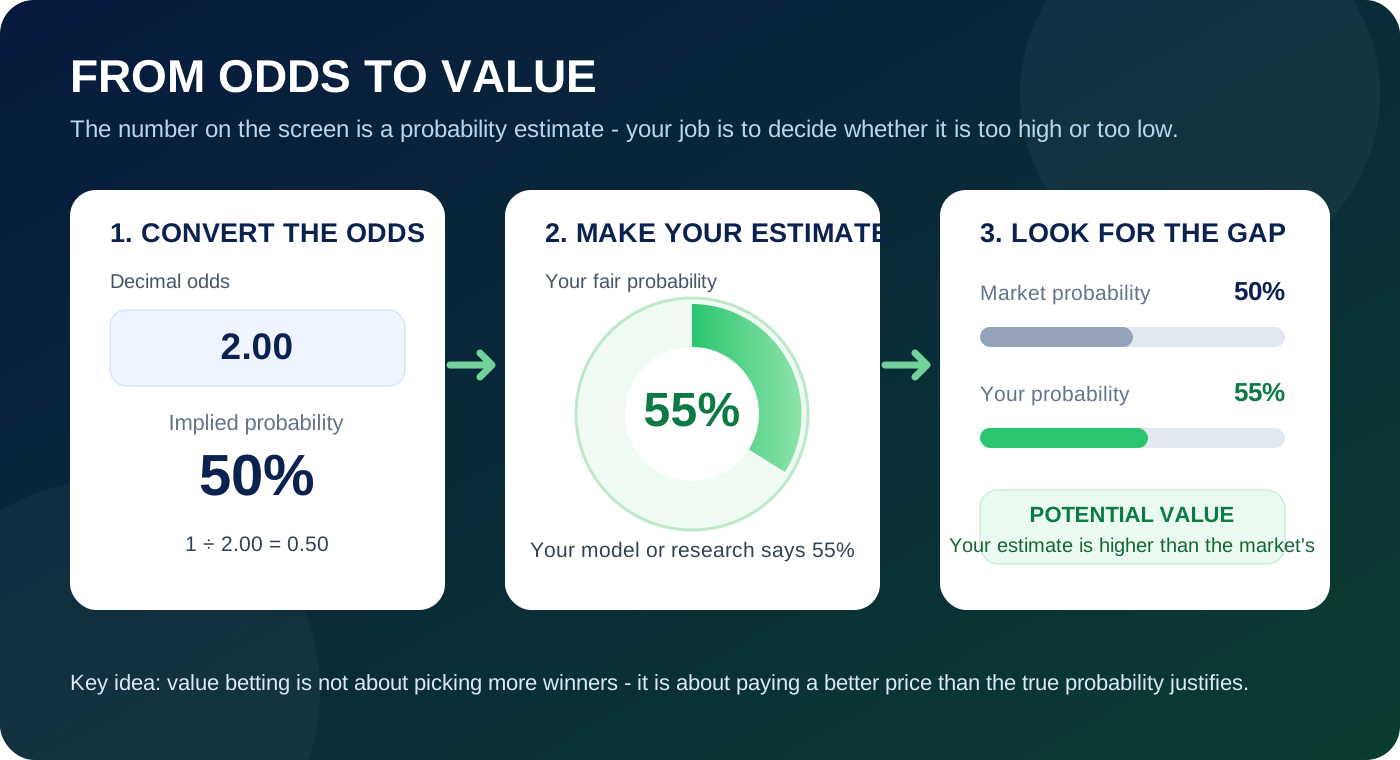
Implied probability: 50%. Calculation: 1 ÷ 2.00 = 0.50.
Implied probability: 66.7%. Calculation: 1 ÷ 1.50 = 0.667.
Implied probability: 33.3%. Calculation: 1 ÷ 3.00 = 0.333.
The vig is the hurdle
If you convert both sides of a two-way market to implied probability, the total usually exceeds 100%. That excess is the sportsbook margin. Your estimated edge has to be large enough to beat that built-in disadvantage over time.
Line shopping: the easiest edge to improve
Different sportsbooks can price the same market differently. Taking the best available number does not require a better prediction model - just the discipline to compare before you bet.
| Same outcome | Price A | Price B | Better choice | Why it matters |
|---|---|---|---|---|
| Moneyline selection | 1.80 | 1.91 | 1.91 | Higher return for the same winning outcome. |
| Point spread | -6.5 | -5.5 | -5.5 | One extra point can materially change cover probability. |
| Total | Over 47.5 | Over 46.5 | Over 46.5 | A better number can turn a push or loss into a win. |
The benefit looks small on one wager. Across hundreds of bets, consistently taking slightly better prices can be one of the biggest improvements a bettor makes without changing their forecasting ability at all.
Closing line value: judge the bet, not just the result
Short-term betting results are noisy. A smart bet can lose and a weak bet can win. Closing line value gives you a better way to judge whether you are consistently getting ahead of the market.
Positive CLV example
You bet a team at 2.20. By game time, the best market price is 1.95. The market moved toward your position, which is evidence that you captured a stronger price than late bettors.
Why CLV matters
Over a large sample, consistently beating the closing line is a better sign of process quality than simply counting wins. It helps separate skill from short-term variance.
Bankroll management: stay alive long enough for skill to matter
A good betting process can still experience long losing stretches. Bankroll management reduces the chance that normal variance wipes you out before your strategy has enough time to show whether it works.
| Approach | Typical stake | Best for | Main risk |
|---|---|---|---|
| Conservative | 1% of bankroll | New bettors, volatile markets, long-term tracking | Slower bankroll movement |
| Moderate | 2% of bankroll | Experienced bettors with a tested process | Drawdowns become more noticeable |
| Aggressive | 3%+ of bankroll | Only for bettors who understand variance deeply | Losing streaks can damage the bankroll quickly |
For a deeper staking framework, including units and downswing handling, see our dedicated Bankroll Management guide.
A repeatable sports betting workflow
The most useful strategy is one you can repeat. A structured workflow reduces emotional decisions and creates a record you can actually learn from.
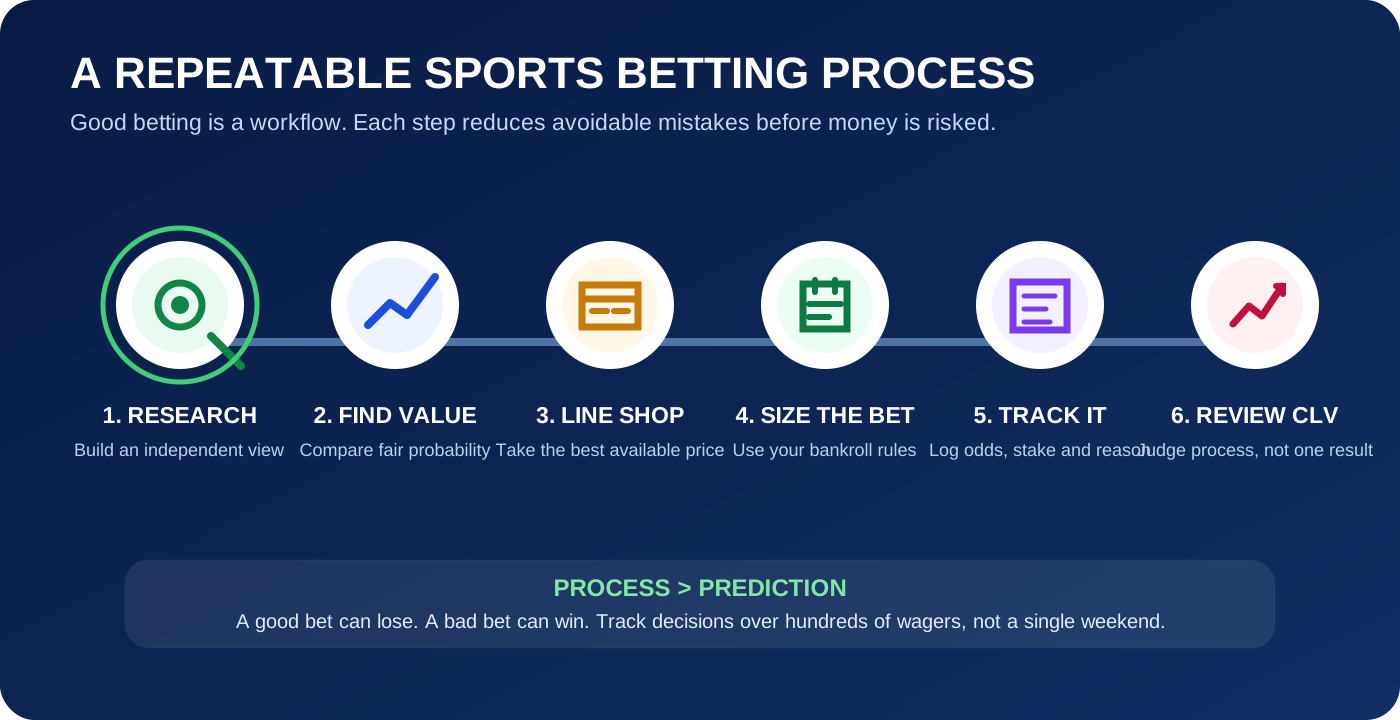
- Form an independent view before looking too closely at the market price, so your estimate is not anchored by the sportsbook.
- Convert the market price into implied probability and compare it with your own estimate.
- Only bet when the gap is meaningful enough to justify the vig and uncertainty in your estimate.
- Line shop and take the best available number.
- Size the stake from your bankroll rules, not from emotion or how much you lost yesterday.
- Track the bet and review the closing line so you can judge process quality over time.
Common strategic mistakes
The most expensive leaks are often simple. They are also repeatable - which makes them fixable.
- Betting favorites because they "should" win. The odds already reflect who is more likely to win. The relevant question is whether the price is fair.
- Chasing parlays for the headline payout. Multiple legs compound the sportsbook margin and create more ways for the ticket to fail.
- Overweighting narrative. Motivation stories, revenge angles, and "must-win" headlines are usually obvious to the entire market and often already priced in.
- Ignoring market-specific vig. Props and same-game parlays can carry much wider margins than mainstream spreads, totals, and moneylines.
- Increasing stakes after losses. Chasing is not a strategy. It changes risk without improving the probability of the next bet.
Best habit for beginners
Track every bet for a few months before deciding whether you have an edge. Record price, stake, closing line, market type, and the reason you placed it.
Best next page
If you understand value but your staking is inconsistent, read Bankroll Management next. It is the foundation that keeps every other strategy usable.