
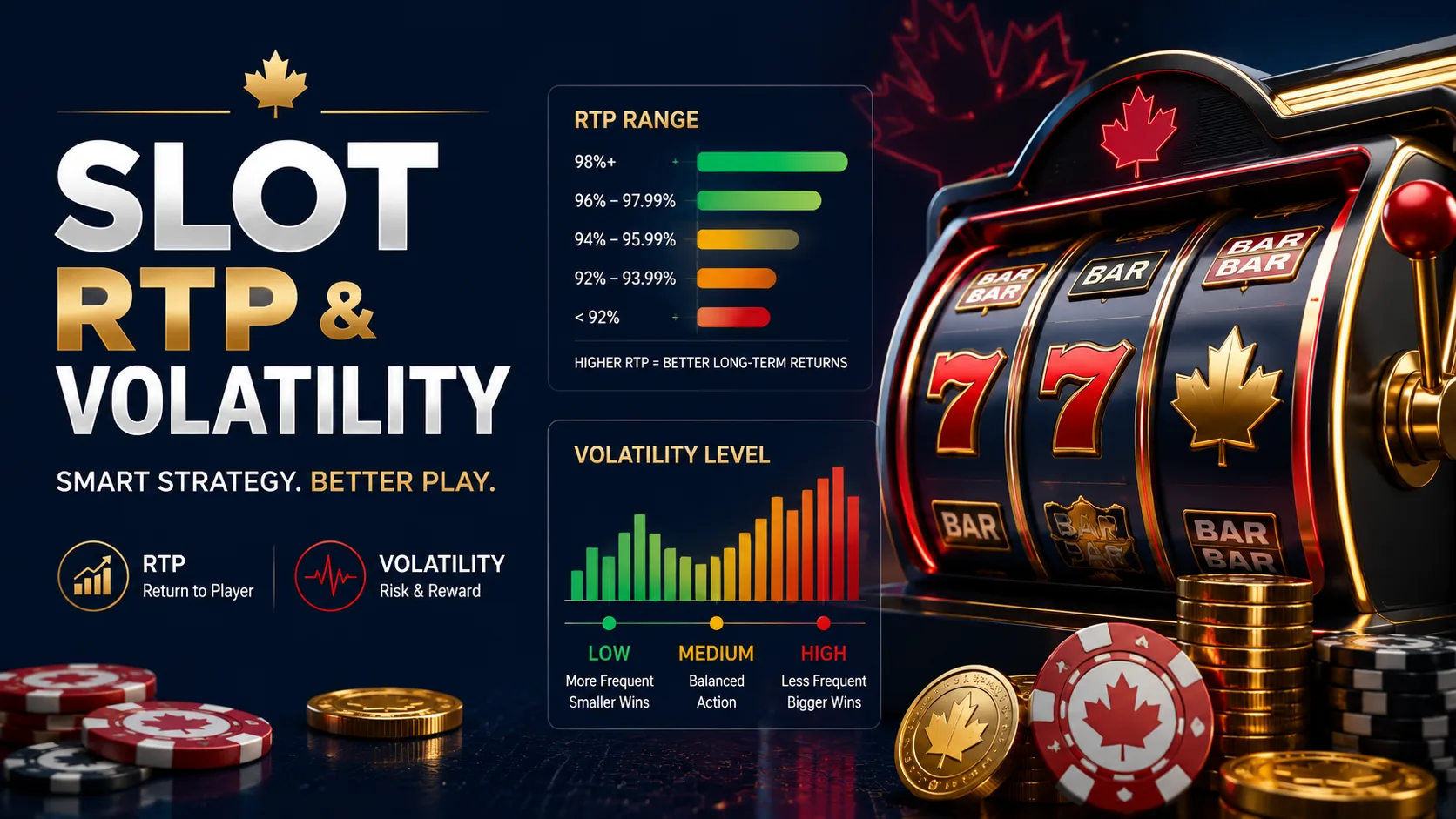
It is the theoretical average over an enormous number of spins, not a prediction for tonight's session.
It explains whether wins tend to be frequent and small, balanced, or rare and potentially much larger.
A small bankroll on a high-volatility slot can disappear quickly even if the RTP looks respectable.
Game selection, bet size, and session budget are the only real slot strategy decisions you control.
Higher RTP is generally better
If two similar slots fit your style, the one with the higher disclosed RTP is usually the better long-term value.
Volatility changes the ride
Two 96% slots can feel totally different because one may drip back small wins while the other waits for rare large hits.
No machine is due
Certified RNG slots do not remember hot or cold streaks. Each spin stands on its own regardless of the previous results.
Slots strategy in one minute
If you want the shortest practical summary first, these are the real decisions that matter on a slot page.
- Check RTP before you start. Prefer higher RTP when all else is equal, especially among similar-style slots.
- Match volatility to your bankroll. Low or medium volatility is usually easier for smaller budgets and longer sessions.
- Use a fixed session budget. Slots move fast, and chasing losses usually leads to worse decision-making.
- Treat jackpots and bonus buys separately. They can change the experience and sometimes the value profile of the game.
- Ignore superstition. Recent outcomes, near misses, and time of day do not alter the next spin.
RTP vs volatility: the difference that trips players up
These two ideas are linked, but they describe different things. Knowing the difference is the fastest way to understand what a slot will feel like.

| Concept | What it means | Why it matters |
|---|---|---|
| RTP | The theoretical return percentage over a very large number of spins. | Helps compare the long-term value of one game with another. |
| Volatility | The distribution of wins across a session. | Helps predict whether the session feels smooth, balanced, or swingy. |
| Hit frequency | How often any win occurs, even if it is small. | Helps explain how active or dry the base game may feel spin to spin. |
| Max win / ceiling | The upper payout potential of the title. | Useful if you specifically care about rare, very large upside. |
Low, medium, and high volatility profiles
No volatility level is automatically "best." The right answer depends on budget, patience, and what kind of win pattern you actually enjoy.

Low volatility
Best for players who want steadier sessions, smaller bet sizes, and a better chance of making a bankroll last longer.
Medium volatility
A middle ground for players who want a reasonable mix of base-game activity and occasional stronger bonus-round potential.
High volatility
Built for players comfortable with long cold stretches in exchange for the possibility of larger bonus hits or top-end payouts.
When a smaller bankroll should go lower
If your session budget is modest, low or medium volatility will usually give you more spins and a better chance to stay engaged. High volatility can drain a bankroll quickly even when the RTP is decent.
When higher volatility makes sense
If your priority is chasing big bonus rounds or a rare high multiple, high volatility aligns better with that goal. Just be realistic about how many uneventful spins may come first.
How to choose a slot in practice
Real slot strategy is game selection plus bankroll discipline. Here is a simple framework you can repeat every time.
1. Start with RTP
Look for the disclosed RTP in the help or info panel. If a title is known to have multiple RTP configurations, rely on the value shown inside the actual game.
2. Check volatility
Use the published rating when available, but remember scales differ by developer. Treat it as a directional guide, not a perfect industry standard.
3. Decide what kind of session you want
If you want more regular feedback, pick lower volatility. If you are specifically chasing bonus-round upside, a higher-volatility title may fit better.
| Your goal | Better fit | What to look for |
|---|---|---|
| Longer session with smaller swings | Low or medium volatility | Higher RTP, gentler volatility, comfortable minimum bet size. |
| Balanced mix of action and upside | Medium volatility | Decent hit frequency, occasional strong bonus feature, solid RTP. |
| Chasing bigger individual wins | High volatility | Large top-end potential, bonus features, and a bankroll that can absorb dry spells. |
| Jackpot hunting | Progressive jackpot slot | Know that most of the upside is concentrated in the rare jackpot event rather than in regular play. |
Progressives, bonus buys, and feature-driven slots
Some modern slots need a little more context because their mathematics or player experience differ from a standard base-game-only title.
Progressive jackpots
The headline excitement comes from a rare jackpot event funded by a shared prize pool. The theoretical return may include the jackpot contribution, but most sessions will never get near that portion of the value.
Bonus buy features
Buying a bonus round concentrates spend and usually increases volatility even further. Some games publish a separate RTP for the bought feature, so do not assume it matches the base game automatically.
Branded or heavily themed slots
Presentation quality tells you almost nothing about the mathematics. A beautiful branded slot may be mathematically average, while a simpler-looking slot can offer stronger value.
Slot myths worth dismissing
These ideas persist because slots are emotional and pattern-heavy. None of them improve your actual decisions.
"The machine is due"
False. Each spin is determined independently by an RNG, not by how cold or hot the machine felt a minute ago.
"Near misses mean a win is close"
False. Near misses are display outcomes, not predictions. The result is already determined before the reel animation finishes.
"Time of day changes payouts"
False. Certified RNG outcomes do not become softer or tighter because of the clock, day of week, or other outside factors.
- Changing bet size does not usually improve RTP. The main exception is when a specific progressive requires a qualifying stake for jackpot eligibility.
- Switching games after a cold run does not avoid bad luck mathematically. What it can do is reset you into a title that better fits your preferred volatility or budget.
- Slots are not beatable by memory or pattern tracking. The most useful habits remain bankroll control and game selection.