Blackjack, roulette, and baccarat all look similar from table to table - but small rule differences change the actual house edge more than most players expect. Here's what to check before you sit down.

Reviewing a table game is a fundamentally different exercise from reviewing a slot. A slot's RTP is a fixed design parameter set by the developer - you're evaluating one specific product. A table game's house edge, by contrast, is a function of the rules a given table is running, and those rules vary meaningfully between operators, even for a game as standardized as blackjack. This page reviews the table games available at licensed Canadian casinos the way our game review methodology is built for that purpose: verifying actual rule sets against their real mathematical house edge, rather than assuming every "blackjack table" or "roulette wheel" is equivalent.
For every table game covered on this page, we check three things specifically. First, the exact rule set - deck count and dealer rules for blackjack, zero-pocket count for roulette, commission structure for baccarat - since these are the actual levers that move the house edge, not marketing or theme. Second, whether the rule set is clearly disclosed in the game's own information panel, so a player can verify it themselves before wagering. Third, how the RNG and live dealer versions of the same game compare, since both formats are common at Canadian-licensed operators and the "same" game can carry different practical trade-offs depending on which format you're playing.

European Roulette keeps 37 pockets instead of 38, which holds the standard house edge at 2.70%.
| House edge | 2.70% (all standard bets) |
| Wheel | 37 pockets - single zero |
| Formats available | RNG and live dealer, widely offered |
European Roulette is the standard against which every other roulette variant should be measured, and it's the one worth actively seeking out. Its single-zero wheel gives every standard bet - inside or outside, straight-up numbers or even-money color and odd/even bets - a flat 2.70% house edge, since the payout odds are fixed while the extra zero pocket (present on American wheels, reviewed below) is simply absent. There's no in-round decision that changes this figure; the entire "strategy" in European Roulette, to the extent one exists, is variant selection and bet-type volatility preference, covered in full in our Roulette Strategy guide.
Verdict: European Roulette is the version to look for whenever it's offered at a similar limit to an American table. The rules are simple, universally disclosed, and the house edge is both low and completely predictable - there's nothing to verify beyond confirming the wheel is genuinely single-zero, which reputable licensed operators disclose clearly in the table's rules panel.
| House edge | 5.26% (standard bets); 7.89% on the five-number bet specifically |
| Wheel | 38 pockets - single zero plus double zero (00) |
| Formats available | RNG and live dealer, common at North American-facing operators |
American Roulette adds a second zero pocket to the wheel, and that single change roughly doubles the house edge on every standard bet compared to the European version - from 2.70% to 5.26%. The payout odds themselves are unchanged (a straight-up number still pays 35:1), but with 38 possible outcomes instead of 37, the probability of winning any given bet drops while the payout stays the same. Worth calling out specifically: the "five-number bet" (0, 00, 1, 2, 3), unique to the American wheel, carries a meaningfully worse house edge - 7.89% - than every other bet on the table, and is worth avoiding outright regardless of which wheel you're playing.
Verdict: American Roulette is not a bad game, but it's a strictly worse version of European Roulette whenever both are available at comparable limits. It remains common at Canadian-licensed operators primarily because of its historical association with North American casino culture, not because it offers the player anything the European wheel doesn't. If a European or French table is available at a similar minimum bet, take it.
| House edge | 1.35% on even-money bets (with La Partage or En Prison); 2.70% on all other bets |
| Wheel | 37 pockets - single zero, same as European |
| Formats available | Less common than European/American; mainly live dealer at Canadian operators |
French Roulette uses the identical single-zero wheel as the European version but adds one of two special rules - La Partage or En Prison - that specifically apply to even-money outside bets (red/black, odd/even, high/low). Under La Partage, a losing even-money bet on a zero spin returns half the stake rather than losing it entirely. En Prison achieves a mathematically similar outcome through a slightly different mechanic: the bet is "imprisoned" for one additional spin rather than settled immediately. Either rule cuts the house edge on even-money bets specifically in half again, down to roughly 1.35% - the lowest house edge available on any standard roulette bet at a legal casino. It's worth noting this reduction applies only to even-money outside bets; inside bets on French tables carry the same 2.70% edge as standard European Roulette.
Verdict: French Roulette, where available, is the single best-value roulette option a Canadian bettor can find. It's less commonly offered than European or American variants - most frequently found on live dealer tables rather than RNG lobbies - but it's worth actively seeking out, particularly for anyone who primarily plays even-money bets like red/black or odd/even.

A 3:2 blackjack payout, dealer rules, deck count and doubling options can materially change the edge before a hand is even dealt.
| House edge | ~0.5% with correct basic strategy (favorable rules); rises to 1.5–2%+ under unfavorable rules |
| Typical deck count | 6–8 decks online; single- and double-deck less common |
| Formats available | RNG and live dealer, near-universal at licensed Canadian casinos |
Blackjack is the one table game where the house edge genuinely depends on player skill, not just table rules - but the rules still set the ceiling on how low that edge can go, which is why verifying them matters more here than for any other game on this page. The single biggest factor is the blackjack payout ratio: a 3:2 payout on a natural blackjack is standard and keeps the house edge near 0.5% with correct basic strategy; a 6:5 payout - increasingly common at some tables, including some online ones - adds roughly 1.4 percentage points to the house edge on its own, making it one of the worst rule variations a player can unknowingly sit down at.
Beyond the payout ratio, dealer soft-17 rules (standing is better for the player than hitting, by roughly 0.2%), deck count (fewer decks favor the player slightly), and whether doubling after a split is permitted (disallowing it costs the player roughly 0.1–0.15%) all move the real house edge in measurable, specific amounts. None of this is visible from a table's name or theme - it's only visible in the actual rules panel, which is exactly why our Blackjack Strategy guide treats rule verification as a required first step, not an optional one.
Verdict: Blackjack remains the strongest value proposition among widely available table games, provided you (a) play correct basic strategy and (b) confirm the table is running a 3:2 payout with favorable dealer rules before sitting down. A 6:5 table is worth avoiding even at an otherwise identical limit, since the payout change alone erases most of the advantage correct strategy is supposed to provide.
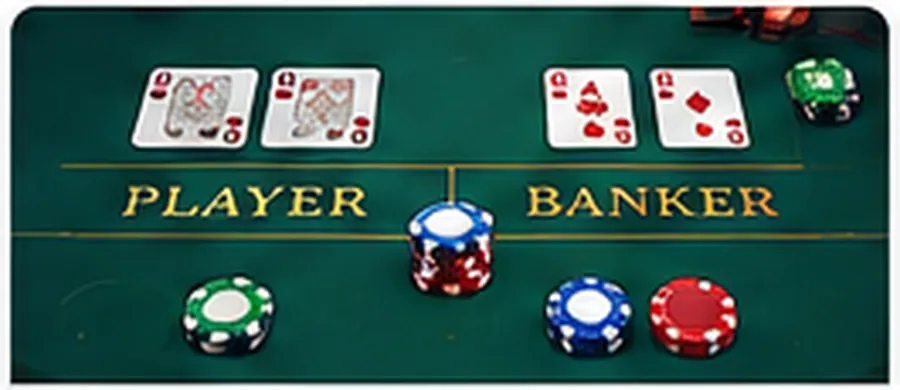
Baccarat needs almost no strategy. The key editorial distinction is bet selection: Banker is usually the strongest standard wager, while Tie is much more expensive.
| House edge | Banker bet: ~1.06% (with standard 5% commission); Player bet: ~1.24%; Tie bet: ~14.36% |
| Decision points | None - drawing rules are fixed and automatic |
| Formats available | RNG and live dealer; live baccarat often includes higher-limit VIP tables |
Baccarat is the simplest game on this page to evaluate, precisely because there's nothing for a player to decide once a bet is placed - a fixed set of drawing rules determines how both the Player and Banker hands play out automatically. The only real decision is which of the three bets to place, and the gap between them is large enough to matter. The Banker bet carries the lowest house edge of any bet on this entire page at roughly 1.06%, a figure that already accounts for the standard 5% commission taken on Banker wins. The Player bet is a close second at roughly 1.24%. The Tie bet, by contrast, carries a dramatically worse house edge - commonly cited around 14.36% - and is worth avoiding outright regardless of the payout odds advertised for it, which vary somewhat by operator but never come close to compensating for the underlying probability.
A detail worth checking specifically: a small number of tables (more commonly in Asia-facing markets, less common at Canadian-licensed operators) run a "Commission-Free Baccarat" variant that pays Banker wins on a 6 differently than standard rules - typically at reduced odds rather than 1:1 - which changes the effective house edge on the Banker bet compared to the standard commission-based version. Always check the specific payout structure in a table's rules panel rather than assuming standard commission rules apply.
Verdict: Baccarat's Banker bet is one of the lowest house-edge wagers available anywhere on a Canadian-licensed casino floor, and it requires zero strategy to access that value - simply betting Banker consistently captures the full advantage. The Tie bet is the one trap worth actively avoiding on this table.
For a given rule set, no - a European Roulette wheel carries the same 2.70% house edge whether it's a certified RNG simulation or a real, physically spun live dealer wheel, since the house edge comes from the ratio of winning to losing pockets, not from how the outcome is generated. The same logic applies to blackjack and baccarat: the house edge is determined by the rules, not the format.
What genuinely differs between formats is pace, atmosphere, and - for blackjack specifically - the theoretical (if rarely practical) relevance of card counting, covered in our Live Dealer Guide. For the purposes of choosing where to get the best mathematical value, format is a secondary consideration behind the actual rule set in play at a specific table.
Most table games on this page offer optional side bets that sit alongside the main wager, and they deserve their own note since they're frequently the single worst-value bet on an otherwise reasonable table. Blackjack tables commonly offer Perfect Pairs (betting your first two cards form a pair) and 21+3 (combining your first two cards with the dealer's up card into a three-card poker hand); baccarat tables commonly offer Player Pair, Banker Pair, and Dragon Bonus side bets. Roulette's "five-number bet," covered above under American Roulette, functions similarly - a bet type layered onto the main game that carries a meaningfully worse house edge than the standard wagers around it.
These side bets aren't inherently something to avoid entirely - they add variety and, for players who enjoy the occasional higher-variance wager, a reasonable amount of extra excitement. But they should be understood as a separate, higher-house-edge category from the main game rather than a natural extension of it, and sized accordingly within your session bankroll rather than treated as equivalent-value wagers to the main bet sitting next to them.
Licensed Canadian operators are required to disclose a game's actual rules clearly, and for RNG table games this is usually straightforward - the information panel lists deck count, payout ratios, and any special rules directly. Live dealer tables sometimes require a bit more attention: the rules are typically shown in a panel accessible from the table interface, but it's worth confirming this before your first hand or spin rather than assuming a live table matches the default rule set you might expect from an RNG version of the same game.
A quick pre-play checklist that applies across every game on this page: confirm the exact payout ratio for a natural blackjack (3:2, not 6:5); confirm whether a roulette wheel is single-zero or double-zero before assuming a European-level house edge; and confirm the commission structure on baccarat's Banker bet, since a small number of tables use non-standard commission or payout arrangements that shift the math slightly from the commonly cited 1.06% figure. None of these checks take more than a few seconds, and each one directly protects the value you're getting relative to the figures reviewed on this page.
| Game | Best-case house edge | Worst-case house edge (bad rules/bet) | Requires strategy? |
|---|---|---|---|
| Blackjack (basic strategy, 3:2 payout) | ~0.5% | ~2%+ (6:5 payout, unfavorable rules) | Yes - significantly |
| Baccarat (Banker bet) | ~1.06% | ~14.36% (Tie bet) | No |
| French Roulette (even-money bets) | ~1.35% | 2.70% (inside bets, same table) | No |
| European Roulette | 2.70% | 2.70% (flat across all bets) | No |
| American Roulette | 5.26% | 7.89% (five-number bet) | No |
A caveat worth repeating: these figures assume the favorable version of each game's rule set. Always verify the actual rules at your specific table - deck count and payout for blackjack, zero count for roulette, commission structure for baccarat - rather than assuming the best-case figures above apply automatically.
Every table game covered on this page is typically offered across multiple limit tiers, letting you match a table to your session bankroll rather than accepting a one-size-fits-all minimum. Starting at a lower-limit table is the sensible default whenever you're trying a game or a specific variant for the first time - this applies as much to confirming French Roulette's La Partage rule works the way you expect as it does to practicing blackjack basic strategy under real conditions rather than demo mode alone. Our Bankroll Management guide covers how to size individual bets against your total bankroll across every game on this page, including the meaningfully different variance profile blackjack's skill-based play produces compared to the purely chance-driven mechanics of roulette and baccarat.
If you're willing to learn a genuine, repeatable strategy and want the lowest possible house edge, blackjack with correct basic strategy is the strongest option on this page, provided you confirm favorable table rules first - see our full Blackjack Strategy guide for the complete hand-by-hand chart. If you'd rather play a game with zero required decisions and still access a comparably low house edge, baccarat's Banker bet is the clearest option - simple, consistent, and requiring no strategy at all beyond avoiding the Tie bet. If you specifically want roulette, variant selection is the entire game: French Roulette where available, European Roulette as the reliable default, and American Roulette only when neither of the better options is offered at a workable limit.
Whichever game you choose, the single habit that matters most across every table on this page is the same: check the actual posted rules before your first wager, rather than assuming a table's name or theme tells you everything you need to know. Our Casino Games Explained guide covers how these games compare to slots and video poker for readers still deciding which category of game suits them, and our Bankroll Management guide covers how to size bets appropriately once you've picked a table.
 Betting